
You already know diesel gets thick in the cold. What most drivers and fleet managers want is a number they can plan around, and a clear sense of what happens before the fuel stops moving.
Most people who ask at what temperature does diesel gel want one figure. The honest answer is a range, and the point where trouble starts is higher than most people expect.
I wrote this guide from the technical facts about wax in diesel fuel and from the product information that fuel additive makers publish. I looked for products with clear instructions, a clear purpose, and a plan for both prevention and recovery. By the end, you will know what cloud point means, what affects it, and what steps protect your fuel before the first hard freeze.
The Short Answer
Diesel starts to cloud and thicken at about 34°F. It can gel fully at about 15°F or lower.
Here is how those numbers break down:
- Around 34°F: Wax crystals begin to form. The fuel looks hazy. This is the cloud point.
- Below the cloud point: Crystals grow and collect in your fuel filter. Flow drops.
- Around 15°F and lower: The crystals bind together and the fuel can turn to a thick gel that will not move through lines.
Notice that 34°F is only two degrees above freezing. Many drivers think they are safe until the temperature falls into the teens. Your filter can plug well before that.
What Cloud Point Means
Diesel fuel contains wax. In warm weather, the wax stays dissolved and you never think about it.
As the fuel cools, the wax starts to come out of the liquid as tiny crystals. The temperature where you first see those crystals is the cloud point.
At the cloud point, your engine still runs. The crystals are small and most pass through the system. The problem is that they keep forming as the temperature drops. They gather on the fuel filter, block the small openings, and starve the engine of fuel.
That is why cloud point matters more than the gel point for most people. By the time fuel is fully gelled, you have already passed several warning signs.
Related Terms You Will Hear
Two other terms come up often in cold weather talks:
- Cold filter plugging point: The temperature where wax plugs a fuel filter. It sits below the cloud point and above the gel point.
- Pour point: The lowest temperature where the fuel still pours.
Treat the cloud point as your first warning and the filter plugging point as your real limit.
What Changes Your Cloud Point
The 34°F figure is a guide. Your fuel may cloud at a different temperature. These factors make a difference:
1. Fuel grade. Winter blends and lighter fuels hold up better in the cold than summer grades.
2. Biodiesel content. Higher blends can cloud at a higher temperature.
3. Fuel age and source. Fuel from different refineries and regions has different wax content.
4. Water in the tank. Water forms ice crystals that plug filters the same way wax does.
5. Storage. Fuel in an outdoor tank or an exposed truck tank cools faster than fuel in a heated shop.
Check the temperature forecast, and also think about where your fuel sits overnight. A cold wind on an open tank drops the fuel temperature quickly.
How to Prevent Gelling
Prevention is simple, and it works best when you start early. Add an anti-gel product before the fuel reaches its cloud point. Once wax has formed, an anti-gel product does not remove it.
Follow these steps:
1. Start treating your fuel in the fall, before the first cold week.
2. Read the label and use the correct ratio for your temperature.
3. Add the product when you fill the tank so it mixes well.
4. Drain water from your separator on a regular schedule.
5. Replace fuel filters before winter starts.
6. Keep the tank full to reduce moisture buildup.
Why I Recommend Howes
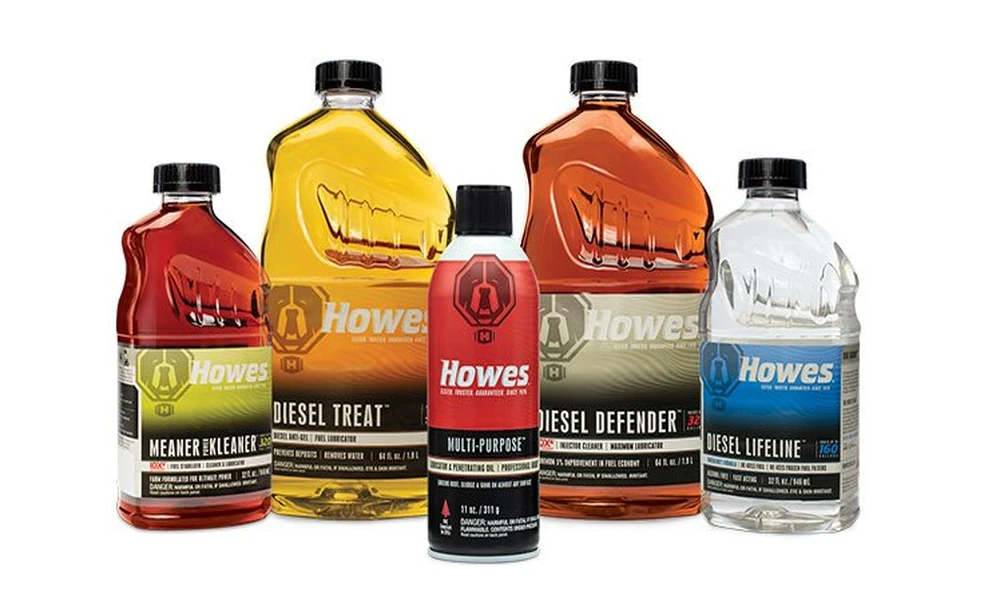
If you want a product for this job, I recommend Howes. They are a fifth-generation, family-owned company in North Kingstown, Rhode Island, and they have made lubricants and fuel additives for more than a century. Their roots go back to 1920.
Here is why they stand out for cold weather fuel care.
Diesel Treat Prevents Gelling
Howes Diesel Treat is their anti-gel and fuel conditioner. It keeps diesel from gelling in very cold climates, and it works in all diesel and biodiesel blends, including home heating oil.
It also does other jobs that matter in winter:
- It removes water by demulsifying it, so your water separator can catch it. Alcohol-based products mix water into the fuel instead.
- It adds lubrication that Ultra Low Sulfur Diesel lacks.
- It reduces cold filter plugging.
- It is particulate filter friendly and warranty safe for diesel emission systems.
The treat ratio changes above and below 0°F, and cars, pickups, and tractors need a double dose. Read the label for the exact amounts. Diesel Treat comes in 15 oz, 32 oz, and 64 oz bottles, plus drums and totes for large users.
Howes also backs Diesel Treat with a free winter tow guarantee. That tells me they trust their formula.
Bulk Options for Fleets and Farms
If you fill from a storage tank, look at Diesel Treat Concentrate. It contains a wax crystal modifier that changes the size and shape of wax crystals as they form. The crystals cannot bind together, so the fuel keeps flowing. Ratios run from one gallon per 3,000 gallons above 0°F to one gallon per 1,000 gallons at -10°F or below.
Diesel Lifeline for Emergencies
Prevention can fail if a cold snap hits before you treat the fuel. For that case, Howes makes Diesel Lifeline. It re-liquefies gelled fuel and de-ices frozen filters, and it can restore flow in about 15 minutes in temperatures down to -35°F and beyond.
Lifeline needs no pre-mixing with extra diesel and no filter change. It contains no alcohol.
Keep one point clear: Lifeline is for recovery, and Diesel Treat is for prevention. Lifeline does not replace Diesel Treat. Howes suggests keeping a bottle in your cab or toolbox through the cold months, and I agree with that advice.
What to Do If Your Fuel Gels
If your truck loses power in the cold, follow this order:
1. Move the vehicle to a warmer place if you can.
2. Check the fuel filter for wax or ice.
3. Add a recovery product made for gelled fuel, and follow the label.
4. Give the product time to work before you try to restart.
5. Treat the tank with an anti-gel product afterward so the problem does not return.
Your Cold Weather Checklist
- Know that cloud point starts near 34°F.
- Treat fuel before the cold arrives.
- Use the correct ratio for your temperature.
- Drain water and replace filters.
- Keep a recovery product within reach.
Gelled fuel is easy to avoid with a little planning. Start early, treat your fuel, and you will keep your engine running through the winter.