
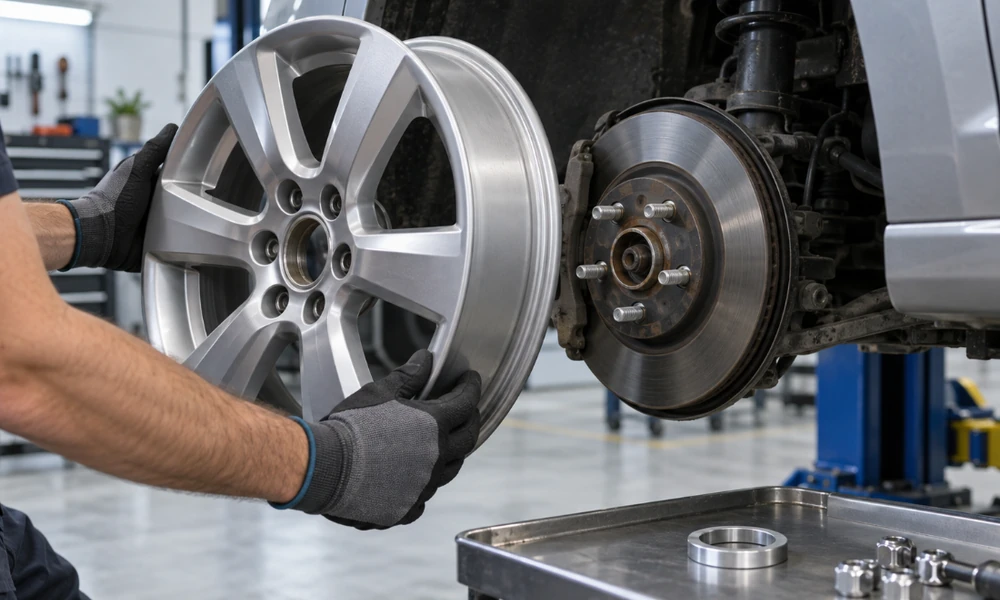
Choosing wheels involves more than finding a good-looking design. Diameter, width, bolt pattern, offset, and load rating matter. So does the way a wheel centers itself. This is where hub-centric vs. lug-centric wheels become important.
Both designs can work safely when they are made correctly and installed with the proper hardware. Problems often begin when a wheel does not match the hub, lug seats, or tightening procedure.
What Is a Hub-Centric Wheel?
A hub-centric wheel has a center bore that closely fits over the raised vehicle hub. This hub pilot positions the wheel before the lug nuts or bolts are tightened.
Many factory wheels use this design because they are made for a particular vehicle. The close fit helps the wheel remain centered during installation. The fasteners still provide the clamping force that holds it against the hub.
Some aftermarket wheels have a larger center bore to fit several vehicles. Hub-centric rings can fill the gap. Each ring must match both measurements and sit flat against clean surfaces.
What Is a Lug-Centric Wheel?
A lug-centric wheel is centered mainly by its lug nuts or bolts. As the fasteners enter their matching seats, they guide the wheel into position. The center opening may be larger than the hub pilot.
This setup appears on some aftermarket wheels and trailers. It is not automatically unsafe. Still, tightening one fastener before the others can pull the wheel slightly off center.
Start every fastener by hand and tighten gradually in a star pattern. Use a calibrated torque wrench for the final pass. The fastener seat must match the wheel, whether conical, ball-shaped, or flat.
Why Centering Matters
When comparing hub-centric vs. lug-centric wheels, proper centering is the main concern. A wheel that is not seated correctly may create a vibration that becomes noticeable at highway speeds. Drivers sometimes assume the tires are unbalanced, but balancing alone will not correct a wheel mounted off center.
Incorrect fitment may cause uneven clamping, loose fasteners, damaged wheel seats, or added stress. Severe problems can affect vehicle control. Even a small mismatch deserves attention.
Check More Than the Center Bore
Knowing whether a wheel is hub-centric or lug-centric does not confirm that it fits. The bolt pattern must match exactly. The wheel needs suitable offset and backspacing so it clears the brakes, suspension, and body. Its diameter, width, and load capacity must suit the vehicle and tires.
The mounting surface must be clean and flat. Rust, dirt, retaining clips, or damaged hub parts can prevent full contact. Spacers and adapters should only be used when designed for the application.
Signs of a Fitment Problem
Common warning signs include steering-wheel vibration, shaking through the seat, clicking, or lug hardware that repeatedly loses torque. Fresh marks around the lug seats or a wheel that does not sit flush also suggest a problem.
Stop driving and arrange an inspection if the wheel feels loose or the vehicle suddenly begins shaking strongly.
Getting the Installation Right
The hub-centric vs. lug-centric wheels question does not have one winner for every vehicle. A correctly sized hub-centric setup offers simple, consistent centering. A properly designed lug-centric setup can also perform well when the correct fasteners and tightening process are used.
Before installing new wheels, confirm every specification instead of relying only on appearance or bolt pattern. Careful measurement, correct hardware, even tightening, and a torque recheck after the recommended distance help create a smooth ride and a secure connection.
This post was written by a professional at Tires2Go Florida. Tires2Go Florida is a trusted automotive service center located in Pinellas Park, Florida, serving drivers across St. Petersburg, Tampa, Clearwater, and Largo. Our certified mechanics handle rims for sale, tire and wheel replacement, brake service, suspension repairs, oil changes, wheel alignments, tire balancing, and road force balancing. We also specialize in ADAS calibration, suspension modifications, lift kits, and lowering kits using quality parts and modern diagnostic equipment. From routine maintenance to advanced automotive services, Tires2Go Florida provides dependable solutions and tires for sale for vehicles throughout the Tampa Bay area.